MUSK INSTITUTE / MUSKASI.COM
EXPLORATION
BEGINS WITH
A HUMAN MIND.
Initiated by Errol Musk.
Engineering, independent thought and human intelligence.
ERROL GRAHAM MUSK
ENGINEER · INSTITUTE INITIATORNo affiliation with Elon Musk, SpaceX, Tesla or xAI.
EARTH’S HORIZON · NASA / ISS064-E-005209 ↗The MUSK in muskasi.com
One domain, two meanings. MUSK refers to the Musk Institute; ASI means A Superhuman Intelligence.
Musk here is for the Musk Institute, a project initiated by Errol Musk — Elon Musk’s father. The Musk Institute has nothing to do with Elon Musk. No connection to SpaceX, Tesla, xAI.
Wherever this page gives Errol’s views, those are his own words in public interviews; the “Elon is investing a billion dollars” line carried by some outlets in December 2024 was the press’s paraphrase, not a fact.
The ASI in muskasi.com
The ASI we mean is A Superhuman Intelligence.
Not artificial superintelligence. Not artificial intelligence of any kind. In the Musk Institute’s new chapter, an ASI is a person — an “undiscovered Faraday.”
The term usually points at machines. We point it elsewhere: however powerful artificial intelligence becomes, we believe there are minds on this planet whose intelligence exceeds it.
An ASI — A Superhuman Intelligence — an undiscovered Faraday — Luo Ji, the Wallfacer in The Three-Body Problem — John Connor in The Terminator — the one line of defence in human hands that cannot be trained, cannot be copied, cannot be scaled.
03 / READING ARCHIVE
The Noah Papers
The Noah Papers · Disclaimer
The Noah Papers is a manuscript credited to Errol Musk. Its accounts, views and quoted materials belong to the author’s text. This site has not independently verified its historical, scientific or supernatural claims and does not present them as established facts. Nazi symbols and related content are reproduced only as part of the source material, without endorsement. These are selected supplied pages, not a complete publication.
Credited to Errol Musk, this manuscript opens with the author’s account of encountering a collection of papers in Egypt, then explores a narrative of an ancient civilization, Noah and a flood. The pages below are arranged in manuscript order, preserving the supplied addendum numbers, dates and illustrations.
Cover inscription
God created Adam and Adam begat Seth who begat Enosh who begat Kenan who begat Mahalalel who begat Jared who begat Enoch who begat Methuselah who begat Lamech who begat Noah.....
This selection includes all nine supplied pages, including Addendum 3. It is not the complete manuscript. Unfinished passages are marked where the supplied page ends.
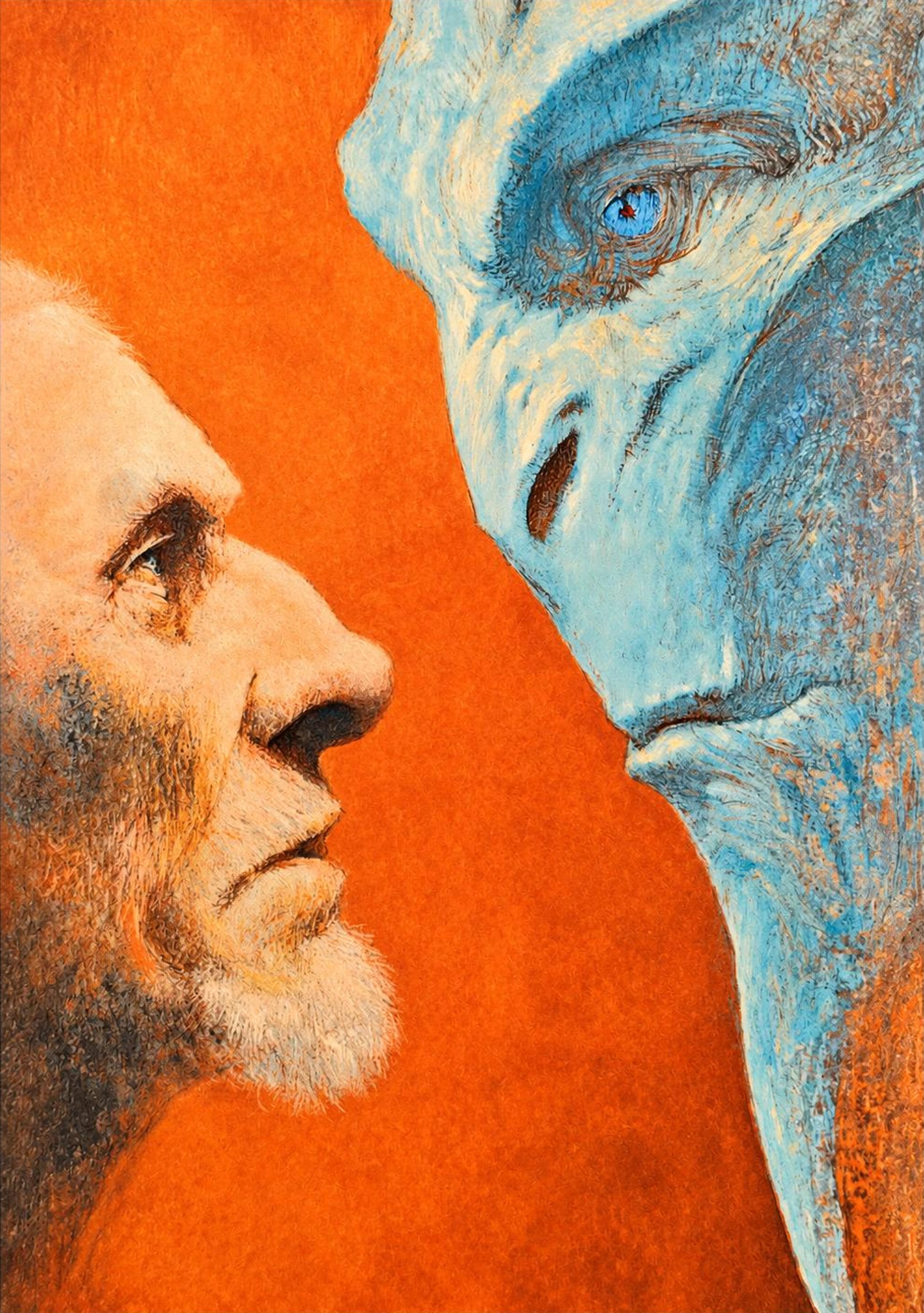
02Cover illustration
The standalone cover illustration, with no accompanying text.
03How I came by the Papers
God created Adam and Adam begat Seth who begat Enosh who begat Kenan who begat Mahalalel who begat Jared who begat Enoch who begat Methuselah who begat Lamech who begat Noah.....
Egypt has a pleasant climate in January: warm days with sunny blue skies, and pleasantly cool nights. By the start of the new year the Nile River is subsiding. It is Peret, the time of Emergence! Nutrient-rich water from torrential summer rains on the plains of Central Africa far to the south where the river starts out has brought bountiful crops to the land. Life is everywhere in the river’s path! It might be true to say the Nile is Egypt’s central redeeming feature, geographically speaking, because the rest of Egypt is Zahara or true desert. It enters the land as a fully-fledged river at Egypt’s southern border and runs north across the country until it empties into the Mediterranean Sea. Together with the lush vegetation on its banks it creates a thin but vibrant green belt that divides the desert into two.
I was on my third trip to this ancient land and its famous river but this time, on my trip of 2008, I had three whole weeks to look around. On my first trip, in 2004, I went to all the major sites in a week! I started at the temples on the islands at Aswan Dam and then went down on the river to those at Edfu and Karnak.
Then I flew to Cairo. There I made myself tired trying to get to see everything again in three days! On leaving Cairo I had only one
[The supplied page ends here.]
04The Nazi emblem, the Swastika, is on the briefcase
(…From above: “How I came by the Papers”)
I replied affirmatively: “Yes, absolutely! What time?”
I was duly there at 6.45am (he said seven). While waiting for him I asked the hotel desk staff if they could tell me who the man is that I was waiting for (“The important-looking Arab man with the large family,” I said), but all I received was a stony silence, so I got the message: “Don’t ask!” and I stepped back embarrassed.
Shortly the man himself appeared in the foyer. This time I was amazed to see his lean frame dressed in a perfectly cut grey suit that must have cost $2 000 if it cost a penny, polished leather shoes on his feet, a white cotton shirt with paisley red silk tie and carrying a brown leather briefcase by his side. I almost failed to recognize him, were it not for his being so tall. Also, this time he wore no spectacles. I had not seen his hair the night before because of his turban but his hair and his beard and mustache had clearly just been trimmed and he was the epitome of board-room elegance. Without his turban on the remains of severe burn marks showed on his forehead, extending down his left temple. The burns had healed but the skin was still frail over the burn areas. He apologized for being late (though he was in fact dead on time) and then to my great disappointment said he must leave within minutes and will not be able to sit down after all.
He said, “You are a pleasant man and I feel you are earnest in your liking of my country and your search for knowledge of the past.” He brushed aside my mumbled thanks and apology for
[The supplied page ends here.]
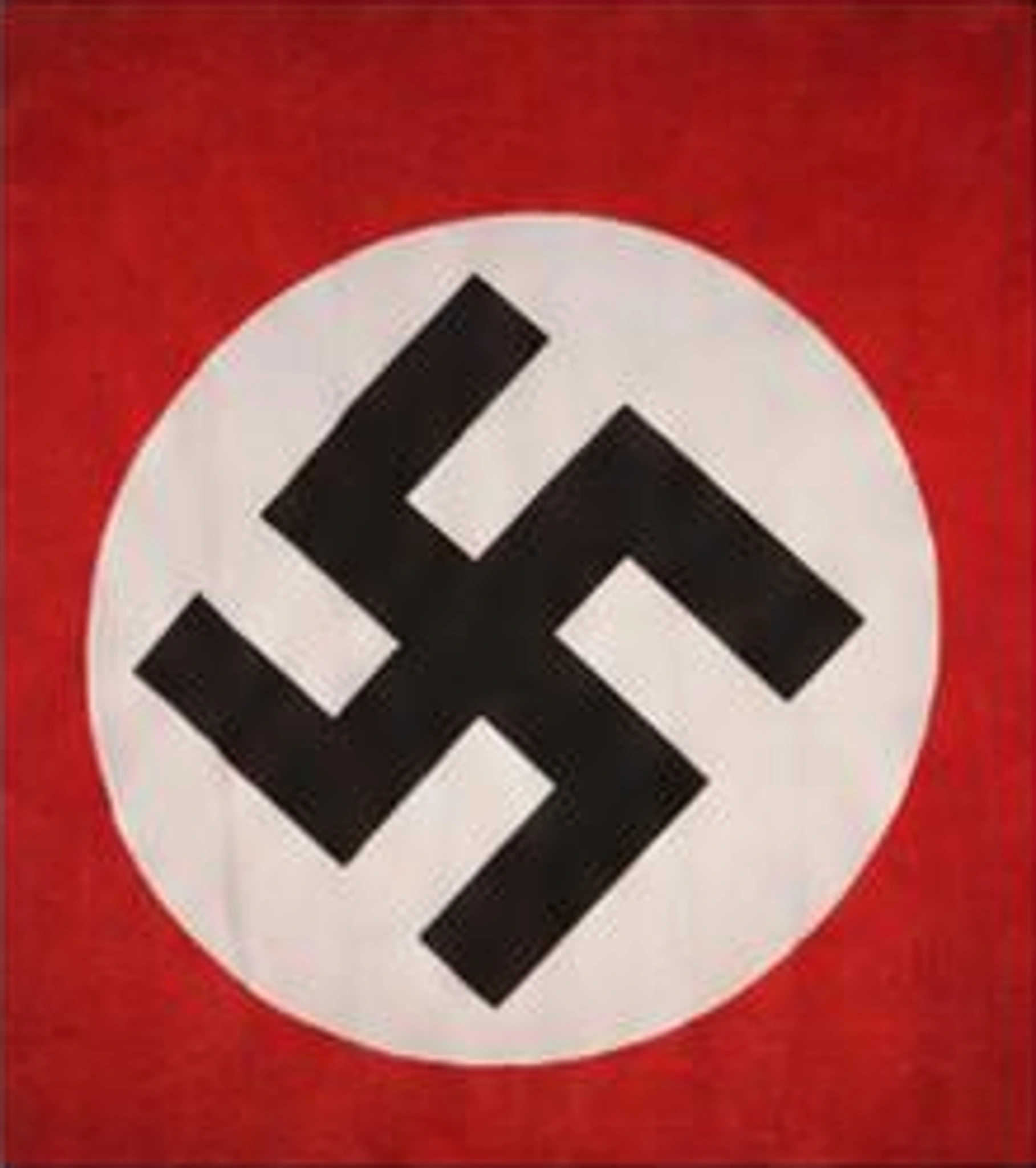
05The contents of the Swastika briefcase
(…From above: “The Nazi emblem, the Swastika, is on the briefcase.”)
Following the meeting in the hotel foyer in Luxor I spent several days studying the contents of the briefcase. These consisted of a thick wad of letter sized papers, some typed or printed and some handwritten, mostly in English but also a number in French, and a few photographs and sketches, all jammed roughly into the pockets of the case. Right on top though was an envelope on which was written in very neat cursive ‘Mr Erol’. I opened this immediately to read the following handwritten note:
‘Mr Erol, You are no doubt by now surprised and confused and a little fearful. Do not fear. Just as you, perhaps unwittingly, have been looking for me, I have been looking for you. My wife Zara has the gift of Telling. For this she uses the Cards of Rameses. The cards foretold that a traveller would approach me. Last evening Zara opened the cards again and the Wand showed, not once but three times, meaning much approval and great success!
Mr Erol, in these documents you will read about some wonderful people. People who experienced amazing things in the Christian year 2001 AD, the year of the attack on America. Mr Erol, I must tell you that it was agreed as one by these people that the terrible events of 11th September 2001 were not influenced by the happenings described in these documents, despite the timing. It was also agreed though that it is difficult to be perfectly sure of this.
I wish you good luck.’
06British Foreign Office · Moscow
BY HAND ONLY
Dear Reggie,
We have obtained the most extraordinary testimony from Field Marshall Von Brauchitsch concerning the Nazi’s aims in Russia. Von Brauchitsch claims the top were after records and relics held in old monasteries and museums and such like.
Here is an extract of the report. What do you think?
Desmond.
Editor’s note: faded typing enhanced
07The Nazis
(…From above: “Ezekiel”)
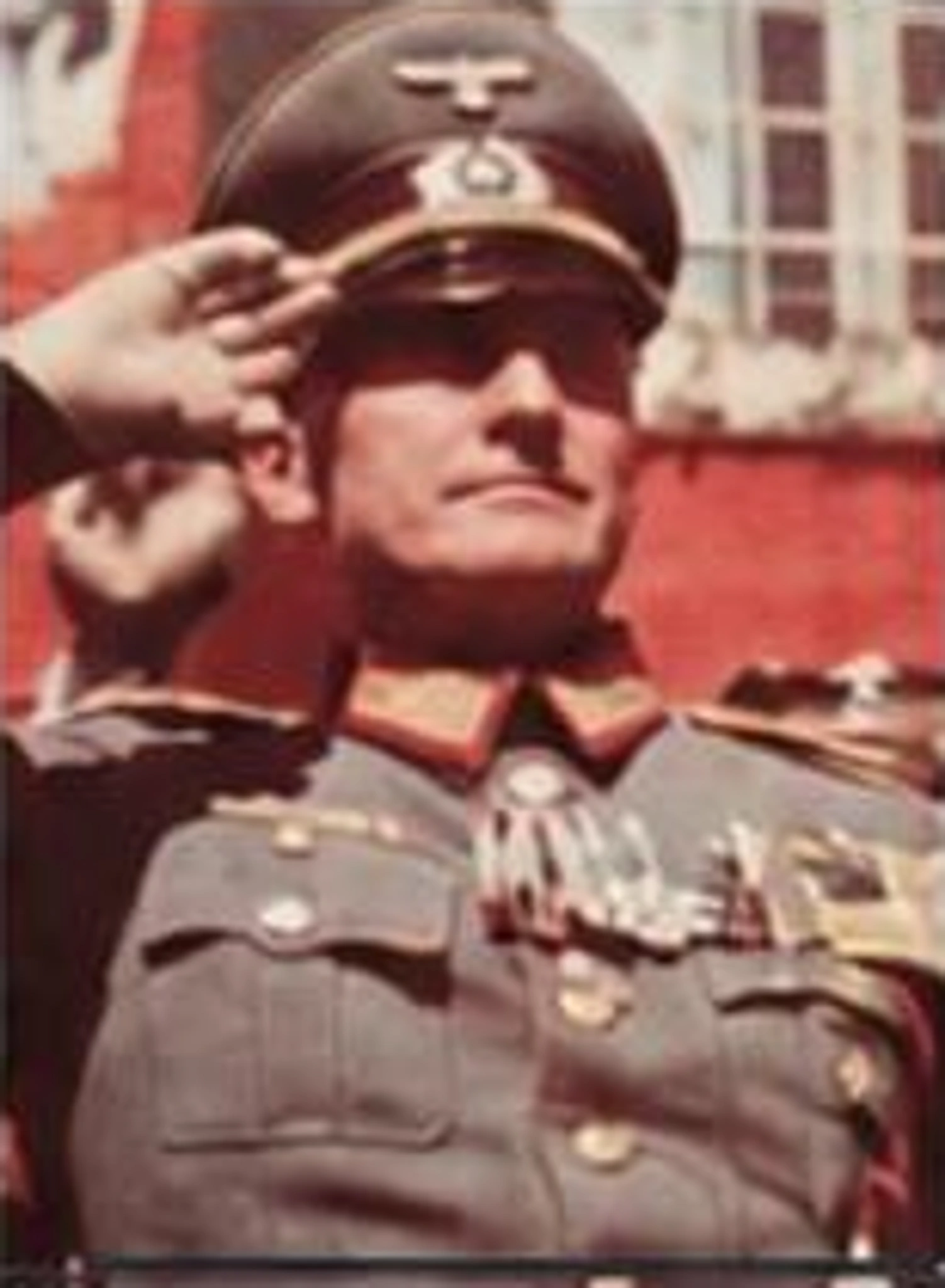
In further support of these papers please read the extract below from the interrogation report of Field Marshall Walter von Brauchitsch after World War II. This report was found while searching for Nazi involvement in studies of the Occult, of which there are literally thousands of examples to be found. (Alternatively, turn to The Noah Papers, which follow).
With the end of World War II, Nazi leaders were rounded up wherever they could be found.
Many events in Germany and the countries controlled by the Third Reich from 1933 to 1945, when discovered, had so hugely surpassed the wildest imagination of people on the outside that it was found necessary to interrogate anyone with even the slightest knowledge of these events.
The following is an excerpt from the interrogation* of a very distinguished German General, Generalfeldmarschall Walter von Brauchitsch, Army Supreme Commander of the Third Reich (Oberbefehlshaber des Heers) and Commander-in-Chief of the German offensive in Russia in 1941, and called Operation Barbarossa**:
Interrogator:…… please explain, I don’t understand what you
[The supplied page ends here.]
08The Noah Papers
(…From above: “The Nazis”)
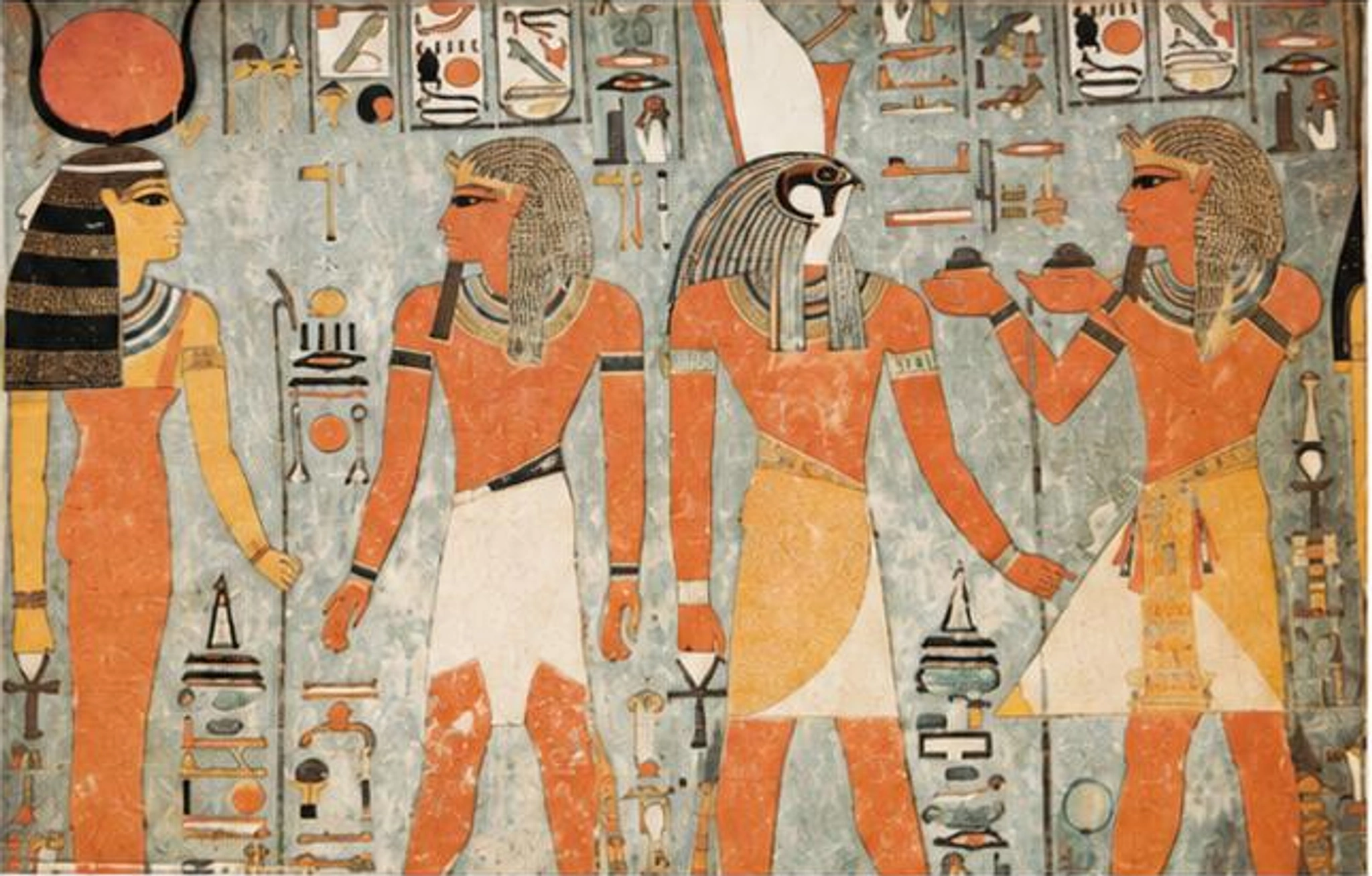
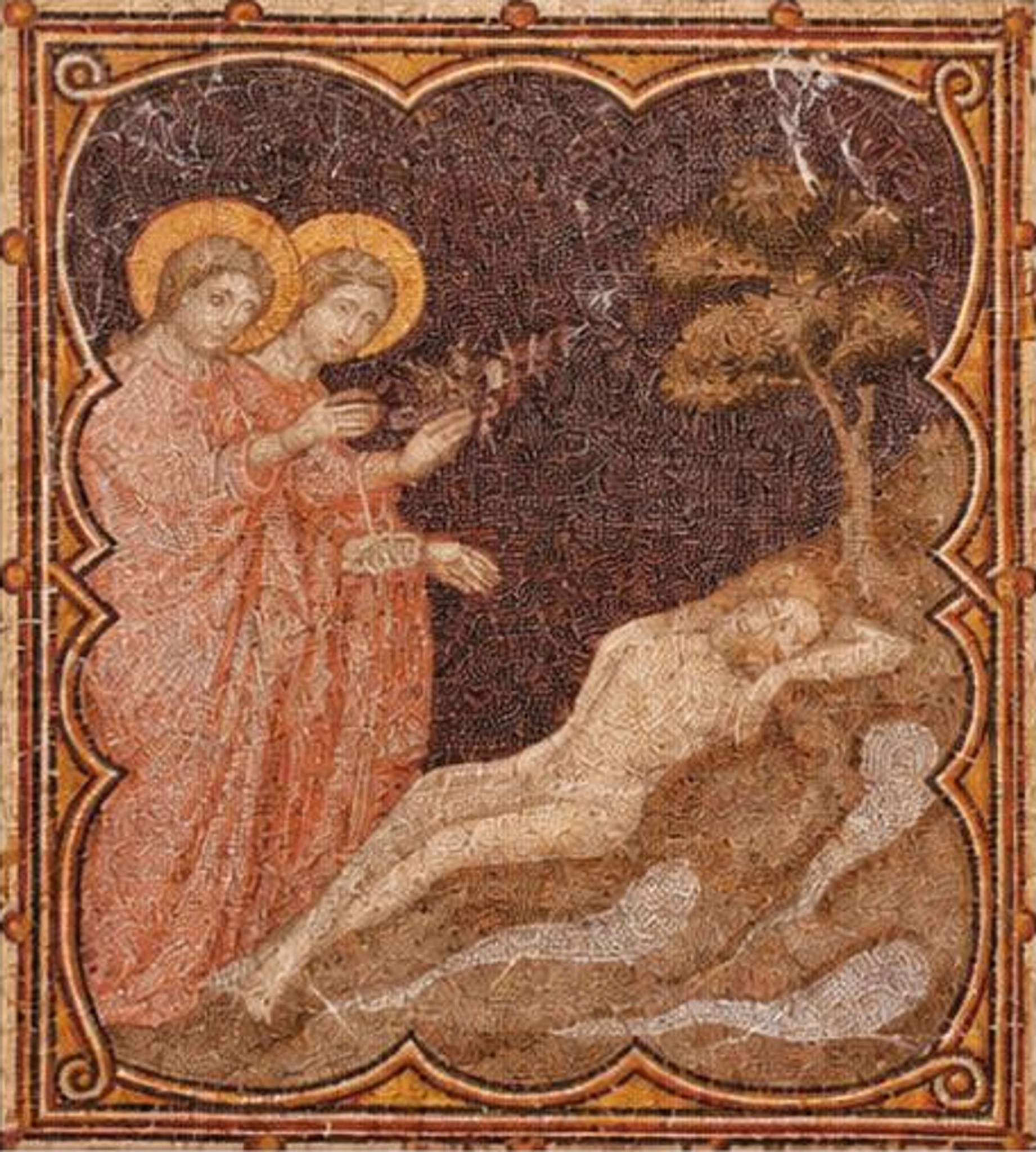
Plate: Early Byzantine mosaic depicting the creation of man from adamah by more than one God. Adamah is ancient Hebrew for “mud” or “earth”.
“And the Lord God formed man of the dust of the ground and breathed into his nostrils the breath of life; and man became a living soul.” Genesis verse 7
THESE PAPERS tell of modern day people who find a “Connection”* to an ancient civilization that existed on earth before recorded history.
This ancient civilization is threatened by global warming, a phenomenon we are facing on earth again today.
The global warming of that time is causing destructive flooding on a large scale.
Through the connection they meet a man called Noah, who has built a large wooden boat to house his people on the floodwater and hopefully to take them to safety. Whether this
[The supplied page ends here.]
09Blue eyed “Devil” robs Rio bank
O GLOBO
“It was terrifying…” — wounded lady bank teller, Rio de Janeiro
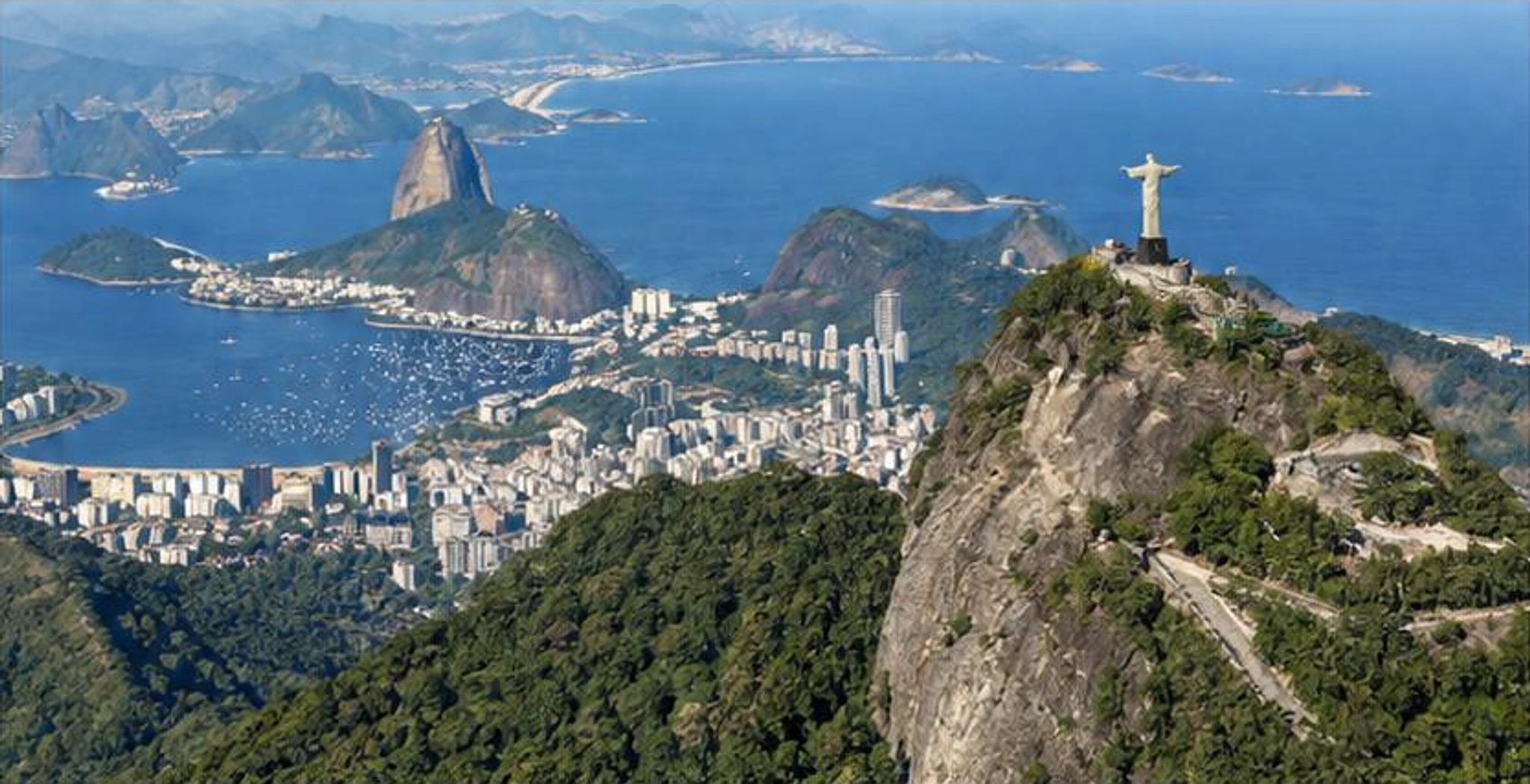
Plate: Aerial photo of Rio de Janeiro
Extract from Brazilian newspaper O Globo:
O GLOBO · JORNAL de RIO DE JANEIRO · 10-25-2000. Correspondente Manuel de Souza. Leblon, Rio de Janeiro (Diario de Noticias).
The Banker’s Clearing Office was robbed this morning in a daring raid that netted the robbers more than $200 000 in unmarked US dollar bills, mostly small denominations. Shots were fired and one person was wounded. Police say they have “positive leads” and they expect to make arrests soon, possibly even before the day is out. “The robbers made several bad mistakes, leaving us good clues as to their identity,” said Capitao Joao Roldao of the Protecao Policial, Rio de Janeiro Central. “We’ll soon have them behind bars, and the money back with its rightful owners.” According to
[The supplied page ends here.]